




























A sudden burst pipe, leaking washing machine, or heavy storm can soak carpet in minutes.
Left untreated, trapped moisture quickly leads to mould, odours, and structural damage—problems that are expensive and unhealthy.
The good news? If the water is clean (tap water or fresh rain), many Australian homeowners can dry carpet themselves and avoid costly replacement.
Here’s a practical step-by-step guide inspired by industry best practice (AS-IICRC S500 Standard for Professional Water Damage Restoration).
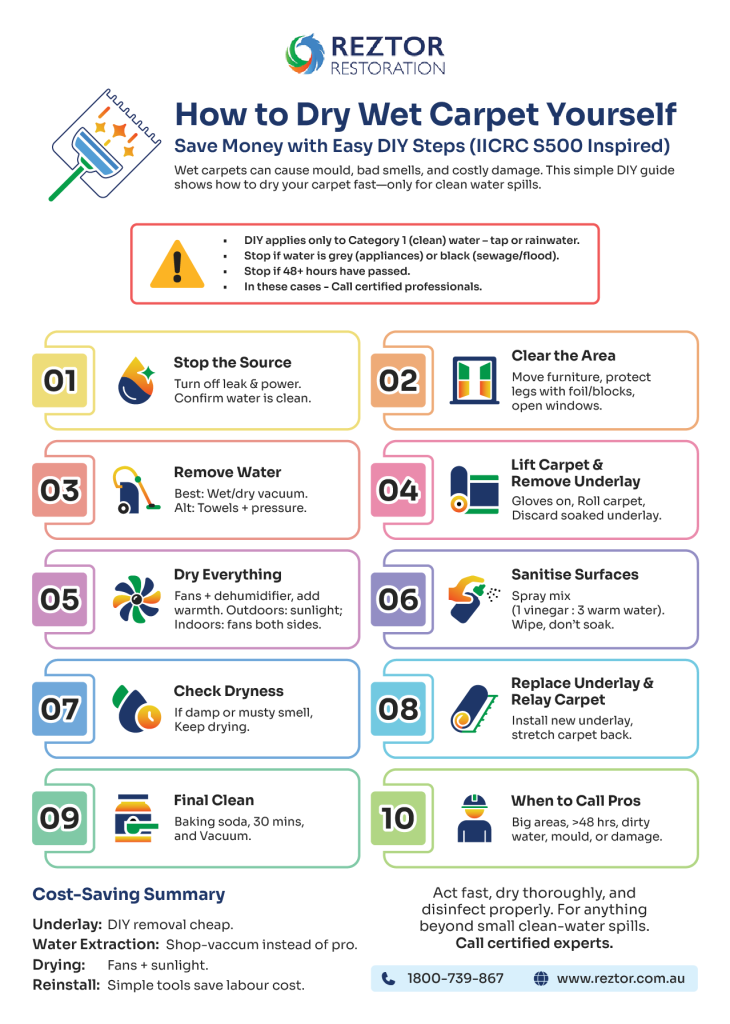
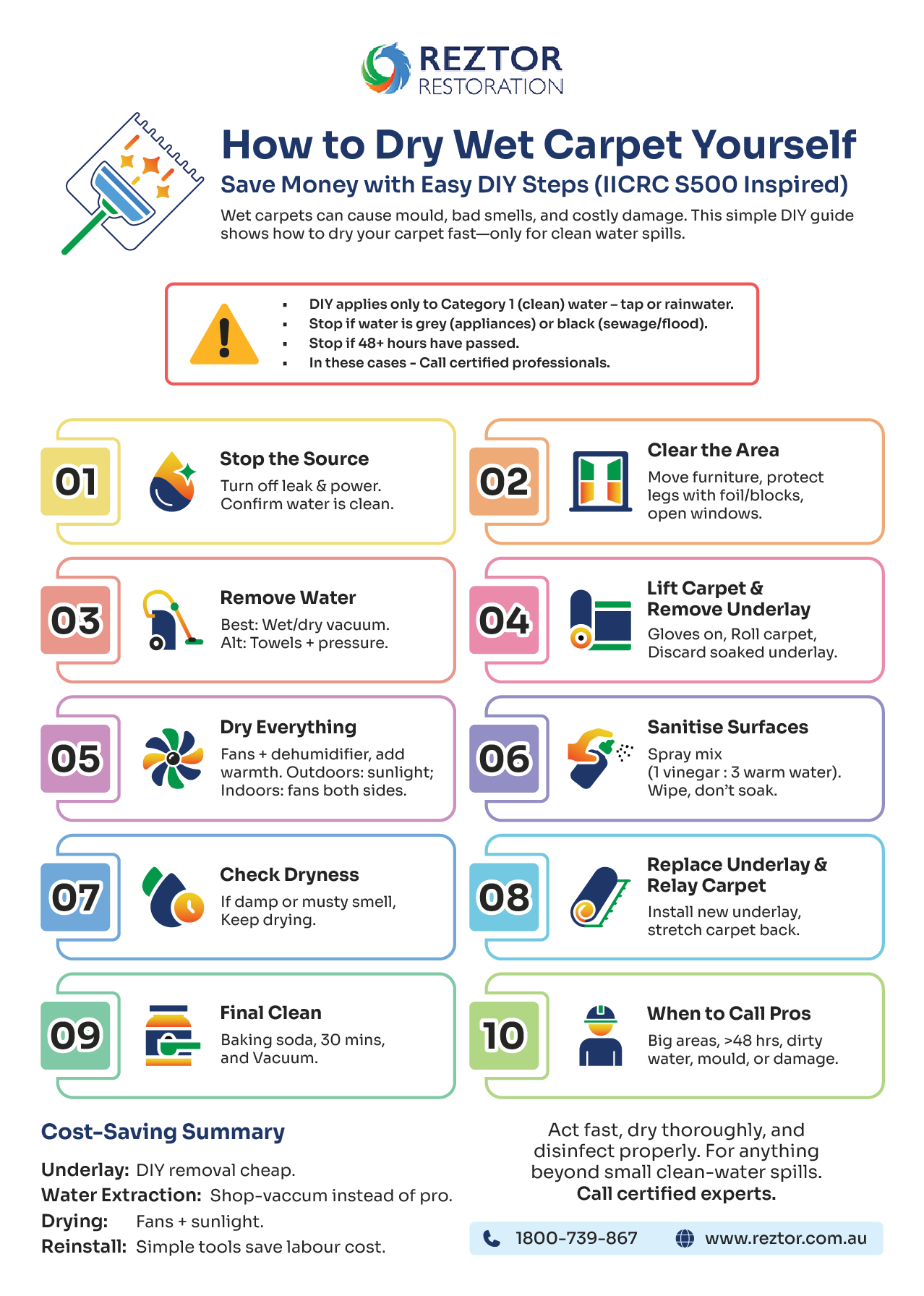
1. Safety First
- Shut off the water and, if necessary, isolate the electricity in the affected area.
- Only attempt DIY if the water is clear and uncontaminated.
- Grey water (from dishwashers/washing machines) or black water (sewage or floodwater) requires professional remediation.
2. Remove Standing Water
- Use a wet/dry vacuum to extract as much water as possible.
- No vacuum? Lay thick towels over the wet area and press down firmly to absorb moisture.
- Start from the edges and work inward to avoid spreading water.
3. Lift Carpet and Discard Wet Underlay
- Wearing gloves, carefully unhook and roll back the carpet.
- Remove and dispose of the soaked underlay—it retains water like a sponge and rarely dries evenly.
- Dispose of underlay responsibly at your local waste facility.
4. Promote Airflow and Drying
- Position fans to circulate air above and below the carpet.
- Run a dehumidifier to pull moisture out of the air.
- Open windows when the outside air is dry; close them during high humidity to prevent re-wetting.
5. Dry the Subfloor Thoroughly
- Timber or particleboard floors absorb moisture.
- Continue airflow until the subfloor feels completely dry and shows no cool or damp patches.
6. Light Sanitising
- Lightly mist a mix of 1 part white vinegar to 3 parts warm water on the subfloor and carpet backing to discourage bacteria and odours.
- Wipe, don’t soak.
7. Check for Hidden Moisture
- Use touch and smell or a moisture meter if available.
- If dampness or musty odours remain after 48 hours, call a professional.
8. Replace Underlay and Relay Carpet
- Once everything is bone dry, install new underlay and relay the carpet.
- Stretch and secure the carpet back into place and vacuum thoroughly.
When to Call a Professional
Seek expert help if:
- Water has been present for more than 48 hours
- There is visible mould, persistent odour, or staining
- The incident involves grey or black water
- The affected area is large or moisture has spread to walls or insulation
Certified technicians use industrial extraction equipment and follow strict drying standards to reach moisture hidden in subfloors and wall cavities—something DIY methods can’t always achieve.
Eco-Friendly Drying Tips
- Reuse Towels & Fans – Launder towels and store them for future emergencies.
- Natural Ventilation – Use breezes and sunlight when weather permits to reduce energy use.
- Save Materials – Acting fast often means carpets can be restored instead of replaced, reducing landfill waste.
Final Word
Prompt action is the key to protecting your floors and health.
| Fast Emergency Water Damage Restoration Service – Open 24/7 Emergency Water Damage Restoration Services across Australia. Delivers fast response, fair pricing, and trusted industry-leading service.reztor.com.au |
Follow these steps for clean-water incidents, but don’t hesitate to call a professional when the situation is beyond DIY.
For expert guidance or 24/7 emergency restoration for wet carpet across Australia, visit Reztor Restoration.
Author Bio
Matthew Brunes is the owner of Reztor Restoration, an IICRC-certified restoration specialist helping Australian homeowners and property managers recover from water, mould, and fire damage using internationally recognised standards.